
The Word of Our Testimony | Her View of His Grace
I’ve been reading a book lately that has stirred something deep in my heart. It’s taken me through the history of the early church, the places where the gospel was first proclaimed, and the generations of believers who faithfully carried the message of Jesus Christ across the world.
And I keep coming back to one question.
The gospel reached us. Now what are we going to do with it?
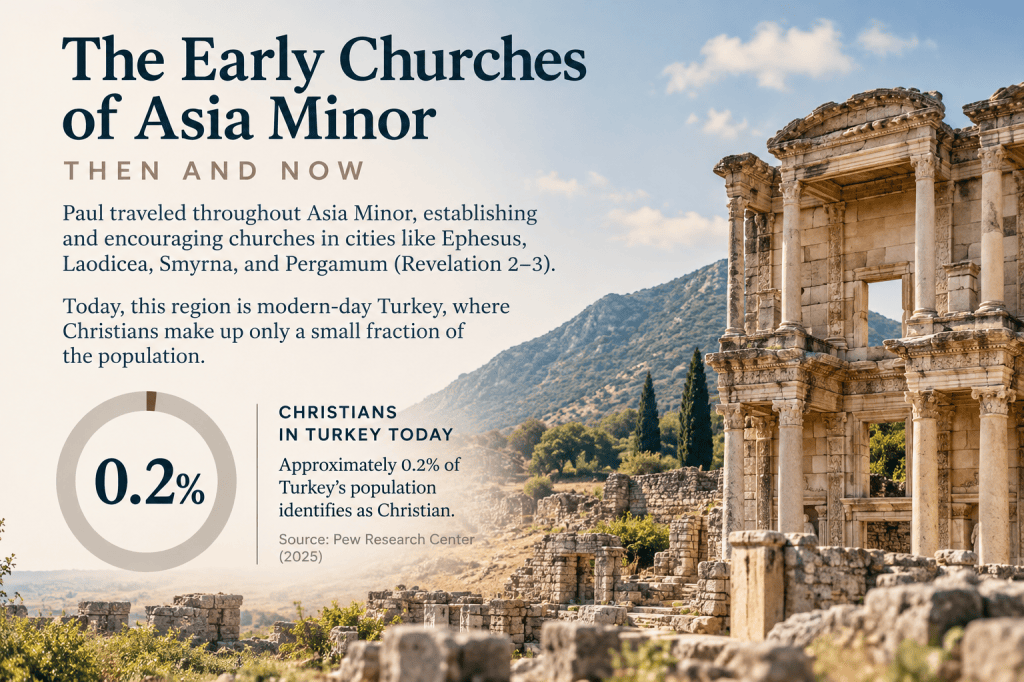
Think about Ephesus, Laodicea, Smyrna, and the other churches we read about in the New Testament. Paul traveled throughout Asia Minor preaching the gospel and establishing churches. Believers gathered, Scripture was taught, and the message of Jesus spread throughout the region.
Today, much of that region is modern-day Turkey, where Christians make up only a tiny fraction of the population.
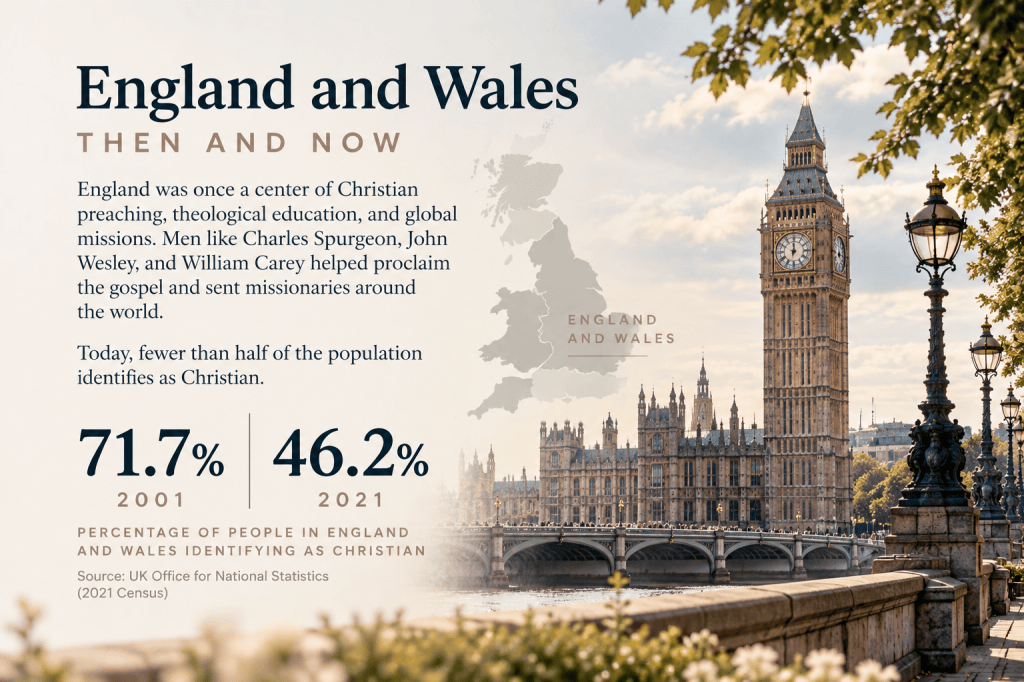
Then consider England, where men like Charles Spurgeon, John Wesley, and William Carey helped proclaim and spread the gospel. These were places where the preaching of God’s Word influenced generations and missionaries were sent around the world.
Yet in 2021, only 46.2% of people in England and Wales identified as Christian, compared to 71.7% in 2001. In London, that number was just 40.7%.
And here in America, Pew Research Center reports that Christian identification among adults declined from 78% in 2007 to 62% in its 2023–2024 study.
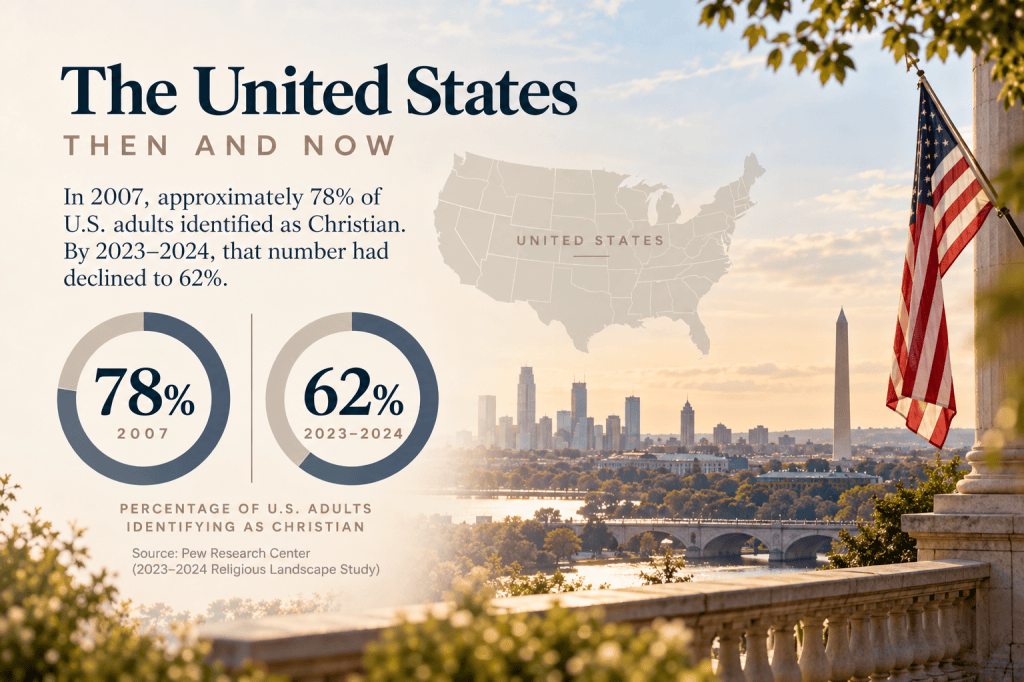
Of course, these numbers don’t tell the entire story. The decline of Christianity in different regions has involved everything from persecution and displacement to secularization and changing cultural beliefs. And identifying as a Christian has never necessarily meant someone has a personal relationship with Jesus.
But as I read through this history, I couldn’t help but think about the generations who came before us and the responsibility we have today.
A rich Christian history does not guarantee a faithful Christian future.
When Another Generation Did Not Know the Lord
Judges 2:10 tells us that after Joshua and his generation died, another generation arose who did not know the Lord or the work He had done for Israel.
Whoa!
This was a people with a remarkable history of God’s faithfulness. They knew the stories of deliverance from Egypt, His provision in the wilderness, and His promises fulfilled. Yet another generation arose that did not know Him.
And I wonder how often we assume that because our children grow up in church, attend Christian schools, or hear us talk about Jesus, they will naturally develop a deep and abiding faith of their own.
We have more access to Scripture and biblical teaching than almost any generation before us. Yet access to God’s Word and knowing God’s Word are two very different things.
Deuteronomy 6:6–7 reminds us that teaching the next generation was meant to be woven into the ordinary rhythms of life. God’s people were instructed to speak of His commands as they sat in their homes, walked along the road, lay down, and rose in the morning.
Discipleship was never meant to be confined to a Sunday morning.
And friend, I think we have to ask ourselves whether we’ve become so comfortable being surrounded by Christianity that we’ve forgotten the responsibility of faithfully passing it on.
Contend for the Faith
Jude 3 urges believers to contend for the faith that was once for all delivered to the saints.
Jude was addressing the danger of false teaching within the church. He understood that believers needed to know the truth, recognize when it was being distorted, and remain faithful to what they had received.
And that raises a question worth considering.
How can we contend for a faith we haven’t taken the time to understand?
We cannot faithfully teach what we have neglected to learn. We need to be women who open our Bibles, study the Scriptures, and grow in our understanding of who God is and what He has revealed.
And lately, that conviction has even challenged how I’ve approached politics. I’ve always valued individual freedom and have often separated my personal Christian convictions from my political decisions. But studying church history has caused me to examine how my faith informs my understanding of government, the policies I support, and the freedoms I’ve sometimes taken for granted. I’m still wrestling through some of those questions, but I’ve been reminded that God’s Word deserves to inform every area of my life.
And that extends far beyond politics. It reaches into our homes, our churches, our relationships, and the everyday opportunities we have to make Christ known.
The Word of Our Testimony
This week, a dear friend of mine, Tanya, is sharing her testimony with HVHG small group. And as I’ve been preparing my heart for that time, I can’t help but see the beautiful connection to everything I’ve been reading.
Tanya’s willingness to share what God has done in her life is a reminder that the gospel continues to be proclaimed through ordinary people who are willing to speak of His faithfulness.
Revelation 12:11 speaks of those who conquered by the blood of the Lamb and by the word of their testimony. In its context, it’s a powerful picture of believers remaining faithful to Christ even in the face of opposition.
And while our circumstances may look very different, we serve the same faithful God.
We have stories of His mercy, forgiveness, provision, and transforming grace. Stories that point beyond ourselves to the Savior who rescued us.
2 Timothy 2:2 reminds us of the importance of stewarding the opportunities God has given us. Paul taught Timothy, Timothy was to teach others, and those believers would continue carrying the message forward.
And now, here we are.
We are part of that long history of believers who have received the good news.
The gospel reached us because faithful men and women continued proclaiming it. Some traveled across oceans. Some endured persecution. Others simply opened their homes, raised their children in the knowledge of the Lord, or shared their testimony with the person sitting across the table.
And now we have the opportunity to do the same.
This Is the Hour
We cannot control what Christianity will look like in America a hundred years from now. We cannot guarantee that the generations following us will believe what we believe. And we certainly cannot change anyone’s heart through our own efforts.
But we can be faithful with what God has entrusted to us today.
We can know His Word. We can teach it to our children. We can share the gospel with our friends. We can encourage other women in their faith and speak of the goodness of God to those who have yet to know Him.
And we can do all of this with confidence, because Jesus promised in Matthew 16:18 that He would build His church and hell will not prevail against it!
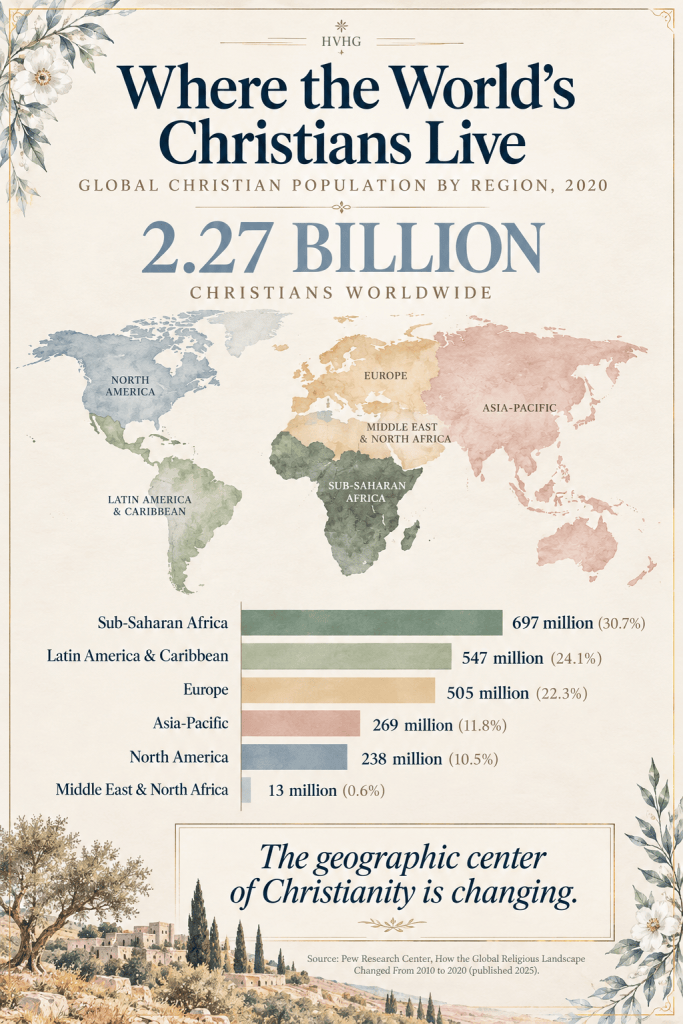
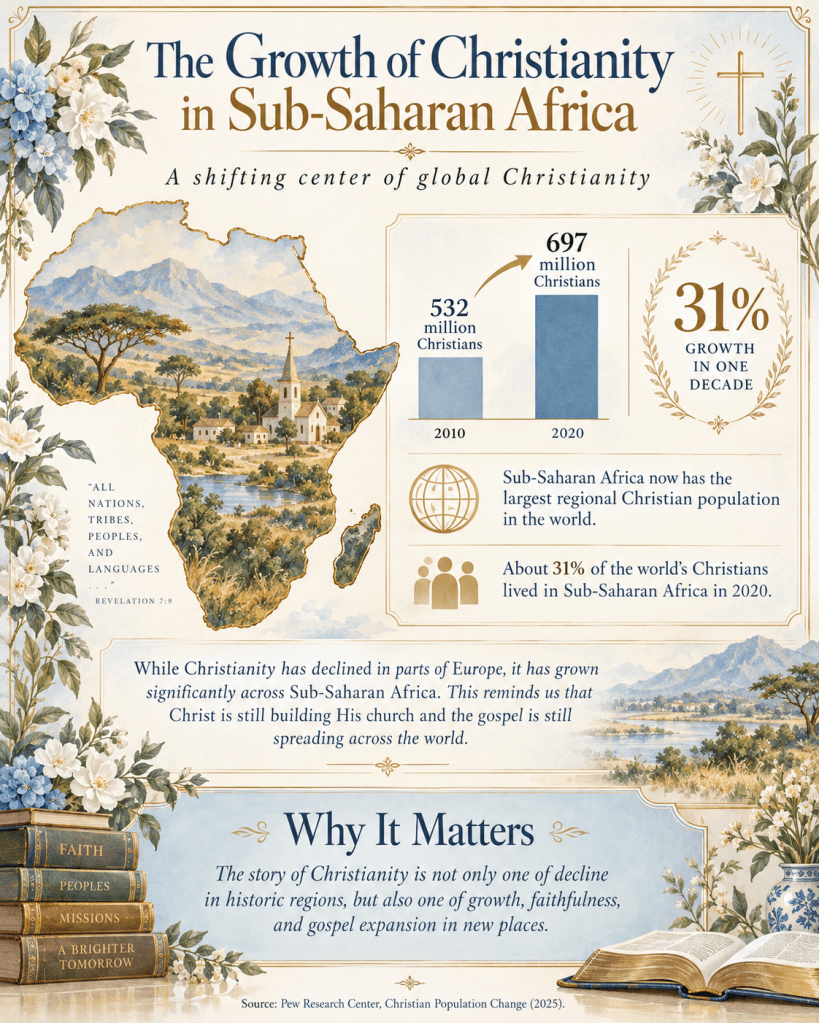
In fact, while Christian identification has declined across much of Europe and America, Christianity has grown tremendously in sub-Saharan Africa. The gospel continues to spread, and God continues to draw people to Himself.
That should give us hope.
But it should also remind us that the opportunities we have today are worth stewarding faithfully. I don’t want to look back one day and realize I was so comfortable living in a place surrounded by Christian influence that I neglected the opportunities God gave me to make Him known.
I want to be faithful in my generation. And I pray that you do too.
The gospel reached us. Now what are we going to do with it?
Maybe the next faithful step is opening your Bible. Maybe it’s having a conversation with your children, sharing your testimony with a friend, or inviting someone to study God’s Word alongside you.
Whatever the Lord has placed before you, don’t underestimate what He can do through your willingness to be faithful. Because this is the hour we’ve been given. And there are still people who need to hear about Jesus.
Research and Further Reading
Mitchell, Philip Anthony. (2026). Contend: Standing Boldly for Biblical Truth While Winning the War Within. W Publishing Group, an imprint of Thomas Nelson.
Pew Research Center. (2025). How the Global Religious Landscape Changed From 2010 to 2020.
Research examining the changing religious composition of the world, including Christianity’s decline in parts of Europe and its significant population growth in sub-Saharan Africa.
Pew Research Center. (2025). Christian Population Change.
A detailed analysis of Christian population trends worldwide, including the movement of Christianity’s geographic center toward sub-Saharan Africa.
Office for National Statistics. (2022). Religion, England and Wales: Census 2021.
Official census findings documenting the decline in Christian religious identification across England and Wales, including London, between 2001 and 2021.
Pew Research Center. (2025). Decline of Christianity in the U.S. Has Slowed, May Have Leveled Off.
Findings from the 2023–2024 Religious Landscape Study examining changes in Christian identification, religious affiliation, and religious practice among American adults.
University of Notre Dame. Christianity in Turkey.
Historical background on Christianity in Asia Minor and the circumstances contributing to the decline of Christian communities in modern Turkey.
Scripture References
Judges 2:10; Deuteronomy 6:6–7; Jude 3; 2 Timothy 2:2; Revelation 12:11; Matthew 16:18.
Research note: Population statistics reflect religious identification, which does not necessarily indicate personal belief, conversion, or active participation in Christian discipleship.


Leave a Reply