
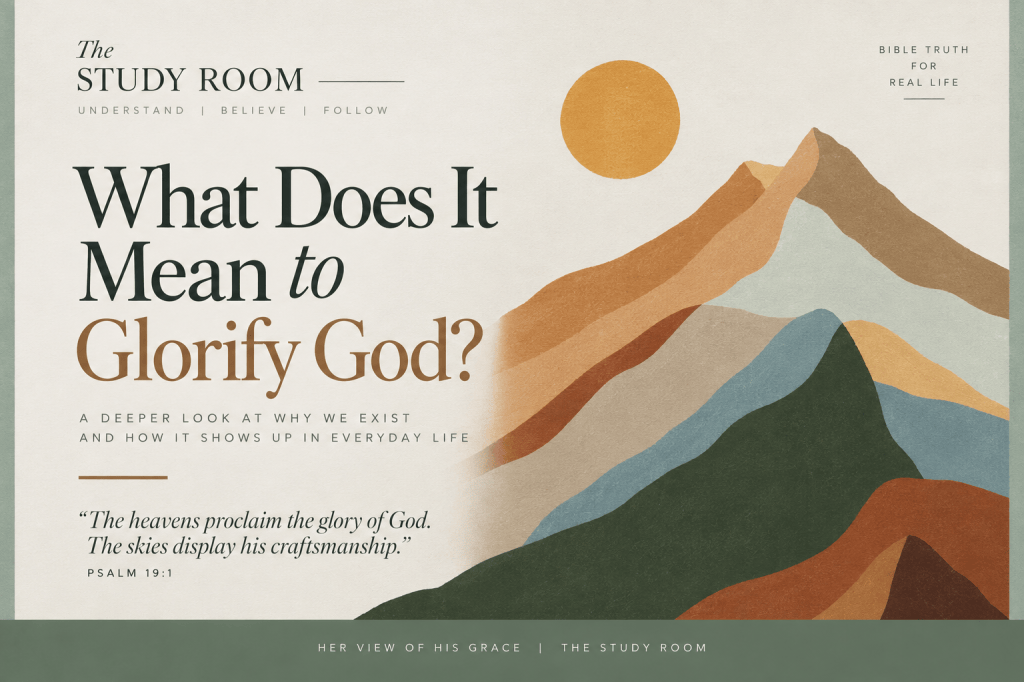
“The heavens proclaim the glory of God. The skies display his craftsmanship.” Psalm 19:1
We hear the phrase “glorify God” all the time. We sing it, pray it, and say that we want our lives to do it. But what does that actually look like on a Tuesday morning when you are making breakfast, answering texts, getting kids out the door, heading to work, or trying to hold your tongue in a hard conversation?
That is where this gets really practical.
To glorify God means to honor, praise, and reflect His greatness in every area of our lives. His glory is the greatness, beauty, holiness, goodness, power, wisdom, and worth of God being made known. Scripture sometimes speaks of glory as the honor that belongs to Him, and sometimes as the visible display of His greatness. We do not add glory to God, because He is already infinitely glorious. We reflect it. We recognize it. We make it known.
Psalm 19 gives us a picture of this. “The heavens proclaim the glory of God. The skies display his craftsmanship.” Creation points beyond itself. The sky, the stars, the oceans, and the changing seasons all tell us something about the One who made them. Romans 1:19 to 20 says
19 For what can be known about God is plain to them, because God has shown it to them.
20 For his invisible attributes, namely, his eternal power and divine nature, have been clearly perceived, ever since the creation of the world, in the things that have been made. So they are without excuse.
And in a unique way, so do we.
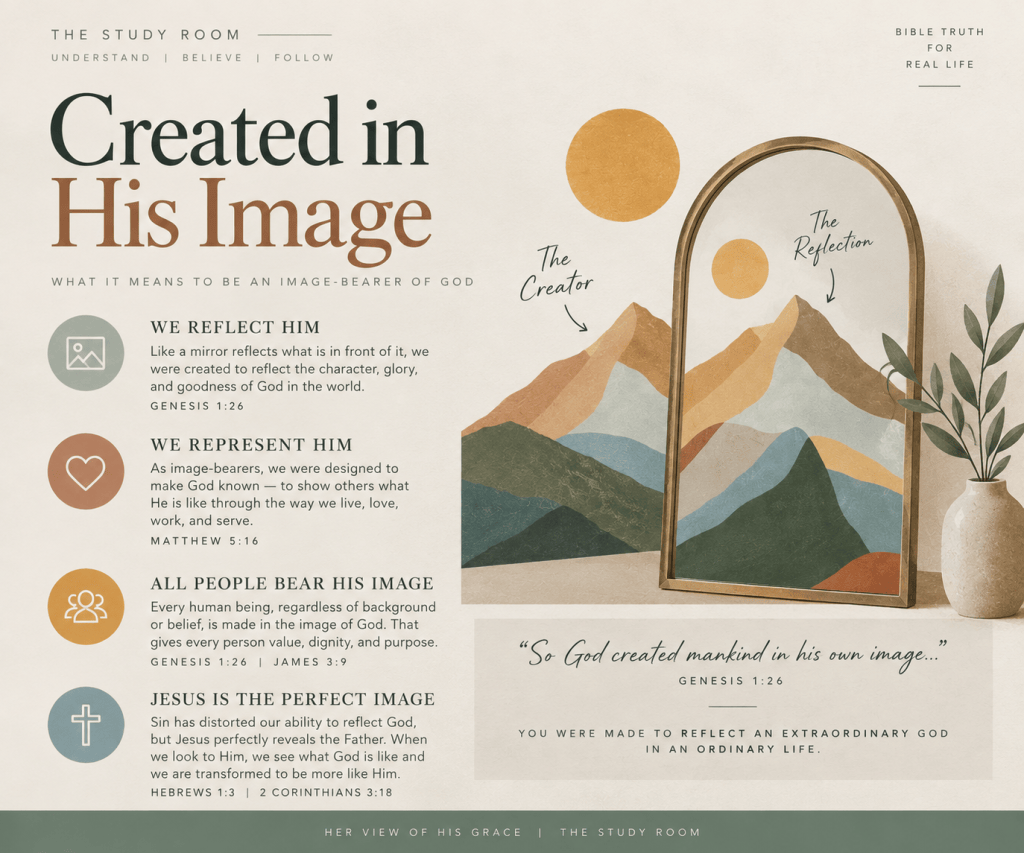
Genesis 1:26 tells us that human beings were made in the image of God. We are image bearers.
26 Then God said, “Let us make mankind in our image, in our likeness, so that they may rule over the fish in the sea and the birds in the sky, over the livestock and all the wild animals, and over all the creatures that move along the ground.”
That means God made us with the capacity to reflect something about who He is. A mirror does not create the image it reflects, and in the same way, we do not create God’s glory. We reflect the God who is already glorious.
This is why the Westminster Shorter Catechism asks, “What is the chief end of man?” and answers, “To glorify God and enjoy Him forever.”
Wait… what is the Westminster Shorter Catechism?
If you just read that and thought, Am I supposed to know what that is?… you are my people.
A catechism is simply an old way of teaching Christian beliefs through questions and answers. The Westminster Shorter Catechism was written in the 1600s as a tool to help ordinary Christians understand and remember foundational Christian doctrine.
It is important to know that a catechism is not Scripture, and we do not treat it as Scripture. It is a historical teaching tool written by Christians attempting to summarize what the Bible teaches. It also comes from the Reformed Protestant tradition, so there are places where different Christian traditions would disagree with it.
So why are we quoting it here?
Because this particular answer beautifully summarizes something we can see for ourselves throughout Scripture. Isaiah 43:7 says God created His people for His glory. First Corinthians 10:31 tells us that whatever we do, we should do everything for the glory of God. Scripture also repeatedly connects knowing God with deep and lasting joy.
The catechism simply gives us a memorable way to say it: We were made to glorify God and enjoy Him forever.
In other words, we were made to know Him, enjoy Him, and live in such a way that our lives point back to Him.
But sin distorted that reflection. Romans 3:23 says
“For all have sinned and fall short of the glory of God”.
We were made to reflect Him, but we do not do that perfectly. We are selfish, prideful, impatient, dishonest, fearful, and inconsistent.
Jesus, however, shows us perfectly what God is like.
Hebrews 1:3 calls Jesus “the radiance of God’s glory.”
3 The Son is the radiance of God’s glory and the exact representation of his being, sustaining all things by his powerful word. After he had provided purification for sins, he sat down at the right hand of the Majesty in heaven.
In John 17:5, Jesus speaks of the glory He shared with the Father before the world existed.
5 And now, Father, glorify me in your presence with the glory I had with you before the world began.
When we want to understand what God is like, we look at Christ. We look at the way Jesus loved, served, obeyed, told the truth, showed compassion, confronted sin, humbled Himself, and gave His life for others.
So how do we glorify God in our own lives?
Jesus answers that in John 15:8 when He says,
“My Father is glorified by this: that you produce much fruit.”
The Greek word used for fruit is karpos. It can refer to literal fruit, but it is also used for the result or outcome something produces. A tree is known by what grows from it. In the same way, our lives produce something too.
When we remain connected to Christ, our lives begin to show evidence of who we belong to. Our character changes. Our priorities change. Our responses change. We become more loving, patient, honest, generous, forgiving, joyful, and humble. The fruit of our lives begins to resemble the character of Jesus.
That fruit glorifies God because it makes Him visible.
This is where glorifying God moves out of the abstract and into ordinary life. You glorify God when you respond with patience when you are tired. You glorify Him when you apologize quickly, when you serve without needing attention, when you tell the truth even when it costs you, when you forgive, when you choose humility over being right, and when you love someone who is difficult to love.
You glorify Him when you bend low and serve.
You glorify Him when you care for someone who cannot give you anything in return.
You glorify Him when you reflect the character of Christ in places where no one is applauding.
Matthew 5:16 says,
“Let your good deeds shine out for all to see, so that everyone will praise your heavenly Father.”
The goal is not for people to walk away impressed with us. The goal is for our lives to point beyond us.
We show the world His glory by reflecting who He is.
Sometimes that reflection happens through the way we live, and sometimes it happens through the words we speak. Scripture also connects fruit with people coming to know Christ. God desires people to be saved and come to the knowledge of the truth, as 1 Timothy 2:4 says, and 2 Peter 3:9 speaks of His patience and desire for people to come to repentance.
So when our lives and words help point someone toward Jesus, God is glorified there too.
But there is one part of John 15 we cannot miss. Jesus does not simply tell us to go produce fruit. He tells us to remain in Him.
“Remain in me, and I will remain in you. For a branch cannot produce fruit if it is severed from the vine.” John 15:4
Fruit is not something we manufacture by trying harder to look like Jesus. It grows out of connection with Him. We remain close to Christ. We know His Word. We obey Him. We depend on the Holy Spirit. And over time, He transforms us.
2 Corinthians 3:18 says that believers are being transformed into His image from one degree of glory to another. God is at work making us more like Christ, and as that happens, our lives increasingly reflect Him.
“And we all, who with unveiled faces contemplate the Lord’s glory, are being transformed into his image with ever-increasing glory, which comes from the Lord, who is the Spirit.” v.18
That means glorifying God is not reserved for pastors, missionaries, or people with a platform. You can glorify God in the kitchen, at your desk, in the carpool line, at the ballfield, in a hospital room, in a hard marriage conversation, or while caring for someone who is hurting.
Isaiah 43:7 says that God created His people for His glory.
7 everyone who is called by my name,
whom I created for my glory,
whom I formed and made.”
That means your ordinary life is not insignificant. It can become a place where the character of God is put on display.
Maybe the simplest way to say it is this:
To glorify God is to live in such a way that who He is becomes more visible through you.
And the way that happens is by staying close to Jesus, allowing Him to produce fruit in your life, and reflecting His character in the places where He has already put you.
For further study, read Psalm 19:1, Genesis 1:26, Isaiah 43:7, John 15:1 to 8, John 17:5, Romans 1:19 to 20, Romans 3:23, Matthew 5:16, 2 Corinthians 3:18, Philippians 2:15, and Hebrews 1:3.
Sources: Systematic Theology by Wayne Grudem, Preaching the Gospel to Yourself by The Daily Grace Co., and the Westminster Shorter Catechism, Question 1.


Leave a Reply