
Corrie + Betsie ten Boom
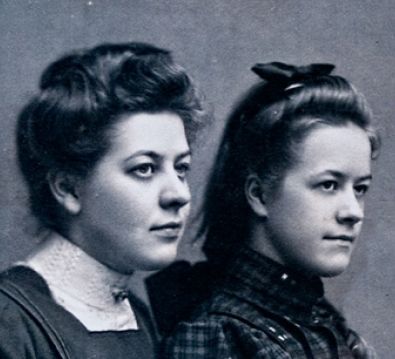
There are some stories from Christian history that almost feel too extraordinary to be real. And then you look closer and realize they began with very ordinary people who simply kept saying yes to God.
Corrie ten Boom was a watchmaker. She lived above her family’s watch shop in Haarlem, Netherlands, with her father, Casper, and her older sister, Betsie. Their home was known as the Beje. Corrie worked with her father in the shop and became the first licensed female watchmaker in the Netherlands. Betsie cared for their home. Their days were filled with watches, customers, meals around the table, family, neighbors, and church.
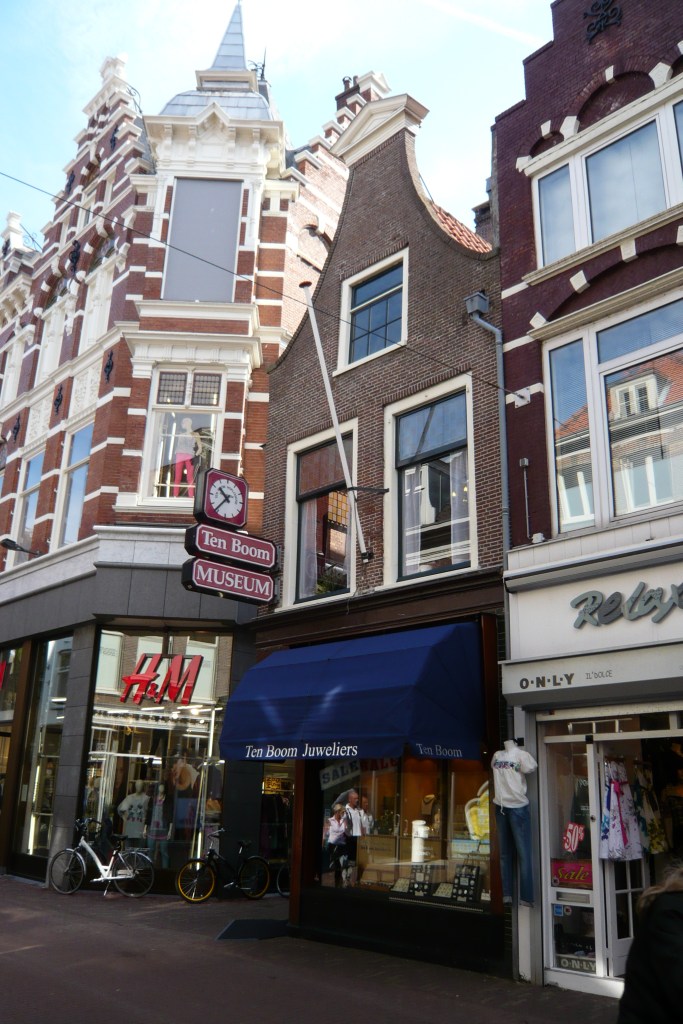
They were ordinary people living an ordinary life.
But they loved Jesus.
And that love had worked its way into the way they saw people. Their home had long been a place of hospitality. Their family cared for people in need. Their father had deep relationships within the Jewish community. Their faith wasn’t something they pulled out on Sunday mornings. It shaped what happened around their table and what they did when someone showed up at their door.
Then Germany invaded the Netherlands in 1940, and slowly the world around them began to change. Jewish neighbors were forced to register. Restrictions tightened. People disappeared. Families needed somewhere to go.
Suddenly, this ordinary Christian family was faced with a very real question: What does loving your neighbor look like when loving your neighbor could cost you your life?
For the ten Boom family, it looked like opening the door.
Their little home above the watch shop became part of the Dutch resistance. Corrie developed connections with people who could provide ration cards and safe houses. A secret room was eventually constructed behind a false wall in Corrie’s bedroom, a tiny hiding place where people could disappear within seconds if the house was raided. Through the network surrounding the ten Boom family, hundreds of Jewish people and others fleeing Nazi persecution were helped to safety.
Just sit with that for a minute.
A watchmaker. Her sister. Their elderly father. An ordinary house.
Surrendered to God, it became a hiding place.
I think sometimes we imagine courage as something God gives to naturally fearless people. But so often courage looks much more ordinary than that. It looks like doing the next faithful thing when you know exactly what it might cost you.
And eventually, it cost the ten Boom family dearly.
On February 28, 1944, someone betrayed them. The Nazis raided the Beje. Six people were hidden behind the false wall in Corrie’s bedroom. The authorities searched the house but never found them. Those six remained hidden until resistance workers were eventually able to rescue them.
But Corrie, Betsie, their 84 year old father, and others in the home were arrested.
Ten days later, their father died.
Corrie and Betsie remained prisoners. Eventually, the sisters were transported to Ravensbrück, a concentration camp for women in Germany. They arrived in September 1944. Disease, starvation, forced labor, overcrowding, brutality, and death surrounded them.
And this is where I really want us to slow down.
Because if the story ended with a hidden room and a courageous family rescuing their neighbors, it would already be remarkable.
But God wasn’t finished writing it.
Somehow, in one of the darkest places imaginable, two sisters began telling women about Jesus.
They had lost their home. They had lost their freedom. They had lost their father. Their bodies were suffering. Death surrounded them.
And still they possessed something their captors could not take from them.
Jesus.
Corrie and Betsie prayed with the women around them. They shared Scripture. They held Bible studies inside their barracks. In a place designed to strip human beings of hope, women gathered around the Word of God.
I cannot get over that. Because I can so easily convince myself that I need better circumstances to be useful to God. More time. More energy. Less distraction. Maybe when this season settles down. Maybe when life isn’t so hard.
But Corrie and Betsie remind us that the presence of God is not dependent on favorable circumstances.
Ravensbrück could take almost everything from them. But it could not take Christ from them.
And then there was Betsie.
Oh, Betsie.
Corrie is the name most of us know. Corrie survived. Corrie wrote the books. Corrie eventually traveled around the world telling people what God had done. But beside Corrie in Ravensbrück was a sister whose faith was quietly shaping the message Corrie would carry long after the war was over.
There is one story about Betsie that I think tells us so much about her.
When the sisters were moved into their barracks, the conditions were miserable. Women were packed together, and the barracks was infested with fleas.
Fleas. Everywhere.
And somehow, the sisters still had access to a Bible that was smuggled in.
As they read 1 Thessalonians 5, they came to the words telling believers to rejoice, pray, and give thanks in all circumstances.
So Betsie began thanking God. She thanked Him that she and Corrie were still together. She thanked Him for the women around them. She thanked Him for the Bible they were able to read. And then Betsie thanked God for the fleas.
Corrie essentially said, absolutely not. And honestly, same, Corrie.
There are things I can imagine thanking God in. But thanking Him for fleas while imprisoned in a concentration camp?
Betsie insisted.
If Scripture said to give thanks in all circumstances, then she wanted to trust God even with something she could not possibly understand.
So they thanked Him.
And something strange was happening in their barracks. The guards largely stayed away, which meant Corrie and Betsie had an unusual freedom to open their Bible, pray, and speak about Jesus with the other women.
Later they discovered why.
The fleas.
Later Corrie found out that the guards didn’t want to enter the flea infested barracks. The very thing Corrie could not imagine thanking God for had helped create space where women could gather around His Word. The guards’ avoidance of the barracks with its flea infestation.
And sister, I have to sit with that one.
How many times have I looked at something in my life and thought, God, why would You allow this?
How many times have I assumed that because something was uncomfortable, inconvenient, painful, or completely outside what I would have chosen, it must be standing in the way of what God is doing?
Meanwhile, God can be working in places we cannot see yet.
That does not mean every painful thing is good. Ravensbrück was evil. What was done to the people imprisoned there was evil. We do not have to call evil good in order to believe God remains sovereign over it.
But evil did not get the final word in that barracks. These woman were able to gather around scripture freely in their barracks because of the fleas. And Jesus was proclaimed in a Nazi concentration camp.
God was still God there too. That is what Betsie’s life seems to keep saying.
She wasn’t pretending Ravensbrück wasn’t terrible. She simply refused to believe Ravensbrück was beyond the reach of God.
And Betsie’s faith reached even farther than surviving the camp. She began dreaming about what could happen after the war. She imagined places where people wounded by everything that had happened could heal. Her vision even extended toward the people responsible for so much suffering.
Then, on December 16, 1944, Betsie died at Ravensbrück.
She was 59 years old.
Corrie was released twelve days later.
Betsie never saw what came next.
She never saw Corrie return to the Netherlands. She never saw the rehabilitation work after the war. She never saw her sister travel across the world telling people about Jesus and forgiveness. She never saw The Hiding Place become the story generations of Christians would know.
But that doesn’t mean Betsie’s assignment was unfinished.
Because Corrie walked out of Ravensbrück carrying truths that had been forged beside her sister.
The United States Holocaust Memorial Museum notes that Corrie’s postwar work with Dutch collaborators and her engagement with German perpetrators were inspired by Betsie. Corrie eventually traveled widely, sharing a message of Christ’s love, forgiveness, and reconciliation.
Betsie didn’t live to carry the message around the world. She helped shape the woman who would.
Look at what God did.
He took an ordinary home and made it a refuge. He took a watchmaker and used her to rescue lives. He took two imprisoned sisters and made a concentration camp barracks a place where women heard about Jesus. He took Betsie’s quiet faithfulness and wove it into a message she would never live to see carried around the world. He took Corrie’s suffering and refused to waste it.
God did not need easy circumstances to accomplish His purposes through these women.
He used their yes.
And their yes looked different in different seasons. Sometimes it looked like opening a door. Sometimes it looked like hiding someone behind a wall. Sometimes it looked like risking their lives. Sometimes it looked like opening a Bible in a concentration camp. Sometimes it looked like Betsie reminding her sister to trust God when Corrie couldn’t see what He was doing.
And eventually, for Corrie, it looked like walking back into a broken world carrying a message she had learned in one of the darkest places of her life:
Jesus was still enough.

Most of us will never be asked to hide someone behind a wall. But every one of us will have moments when we have to decide whether we believe God enough to obey Him when obedience costs us something.
And sometimes the assignment God gives us will be visible.
Sometimes it won’t.
We live in a world that tends to notice the person holding the microphone. We remember the author whose name is on the book. We know the woman whose testimony gets told.
But the kingdom of God has always been filled with people whose faithfulness is quietly woven into someone else’s story.
Maybe that’s the mom who prayed for years. The friend who refused to let you stay stuck. The woman who opened her Bible with you when you couldn’t make sense of what God was doing. The person who reminded you what was true when fear was louder. The woman who sat beside you and believed God when you were having a hard time believing Him yourself.
Hebrews 11 gives us story after story of people who lived by faith. Then Hebrews 12 tells us that since we are surrounded by such a great cloud of witnesses, we should lay aside what hinders us and run with endurance the race set before us.
Their faithfulness should make us want to run ours.
And maybe faithfulness in your season doesn’t look like having the story everyone remembers.
Maybe it looks like being Betsie in someone else’s.
Maybe part of what God has entrusted to you is encouraging another woman. Praying for her. Reminding her who God is. Opening Scripture with her. Sitting beside her in a hard season. Helping her believe something she may eventually carry farther than you ever will.
That doesn’t make your part smaller.
It makes the body of Christ beautiful.
I’ve been thinking about that even more this week as we shared Amber’s testimony. Even when one woman is telling the story, there are almost always other people God has woven through it.
Very few of our stories are ours alone.
So as we begin this new corner of The Study Room, Those Who Went Before Us, I don’t only want us asking, What can I learn from Corrie ten Boom?
I want us asking something a little quieter.
Who has been a Betsie in my story?
Who prayed? Who stayed? Who spoke truth? Who helped shape my faith but may never receive credit for it?
And then maybe the harder question:
Whose story might God be asking me to quietly help shape?
You may never know this side of heaven what God does with the truth you speak into another woman today.
Speak it anyway. Pray anyway. Stay anyway. Point her toward Jesus anyway.
Because sometimes faithfulness looks like carrying the message around the world.
And sometimes faithfulness looks like sitting beside the woman who will.
They went before us. We get to carry the faith forward.


Leave a comment