
Grace Teaches Us What Cannot Come With Us
For all my sourdough-loving friends, you’ll appreciate this.
I recently learned that a sourdough starter can live for a really long time. Like, longer-than-some-family-heirlooms long. In the episode I listened to from The Deep Well with Erin Davis, she shared about a lady who has a sourdough starter that dates back to 1889.
That means this little living culture has been fed, preserved, and passed along for generations.
Wild, right?
I don’t even like sourdough. But my daughter does, and she has been experimenting with making her very first starter. So suddenly, I have been watching this whole process up close. You feed it. You wait. You watch it bubble. You tend it. And over time, that small amount of starter has the ability to work through the whole batch.
That is where the Feast of Unleavened Bread comes in.
I am still new to learning about the biblical feasts, so maybe this is old news for some of you. But it is new to me, and I cannot stop seeing Jesus in it all.
The Feast of Unleavened Bread begins right after Passover.
Passover was the night God delivered His people out of Egypt. A spotless lamb was sacrificed. The blood was placed over the doorposts. Judgment passed over the homes covered by the blood. God brought His people out of slavery with a mighty hand.
It was deliverance. It was rescue.
It was freedom by the blood of a lamb.

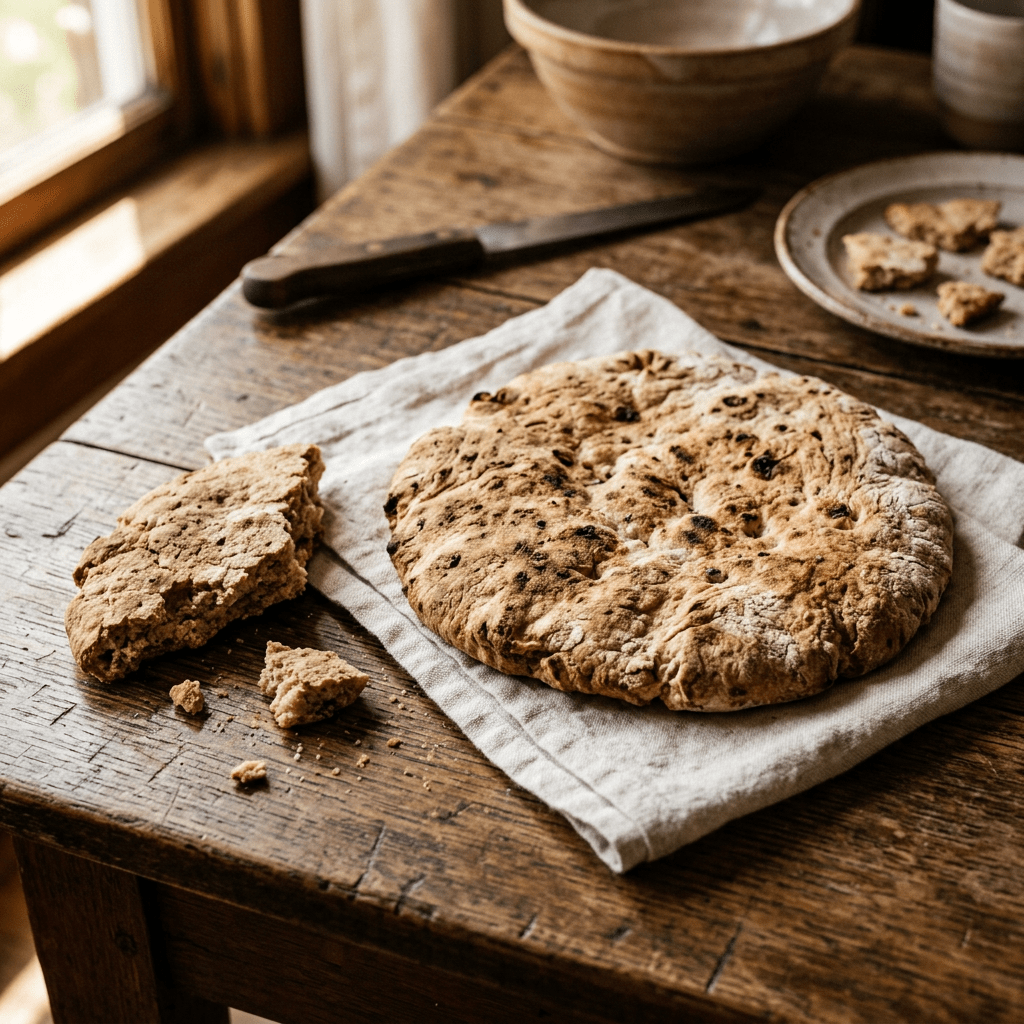
See they had to escape so quickly, there was no time to create new leavening. So they only had unleavened bread as the were being rescued from Egypt.
Then the Lord established a new feast, as we see in Leviticus…
Leviticus 23 says:
“Then on the fifteenth day of the same month there is the Feast of Unleavened Bread to the LORD; for seven days you shall eat unleavened bread.”
Leviticus 23:6, NASB
For seven days, God’s people were commanded to remove the leaven from their homes and eat unleavened bread.
“On the seventh day you must explain to your children, ‘I am celebrating what the LORD did for me when I left Egypt.’ Exodus 13:8
At first, that can sound like a strange detail. Why bread? Why no leaven?
Why would God care so much about what was rising in their kitchens?
But in Scripture, leaven often becomes a picture of sin. It spreads gradually. It does not need much to affect the whole thing.
That is why Paul says:
“Your boasting is not good. Do you not know that a little leaven leavens the whole lump of dough?”
1 Corinthians 5:6, NASB
A little leaven does not stay little. It works its way through.
And that is what sin does when it is tolerated, renamed, protected, or fed.
It spreads into our thoughts. It shapes our words. It affects our relationships. It changes the atmosphere around us. The Feast of Unleavened Bread is not just about cleaning out a pantry. It has always pointing to something greater.
It was pointing to Jesus.
Paul makes the connection plain:
“Clean out the old leaven so that you may be a new lump, just as you are in fact unleavened. For Christ our Passover also has been sacrificed. Therefore let’s celebrate the feast, not with old leaven, nor with the leaven of malice and wickedness, but with the unleavened bread of sincerity and truth.”
1 Corinthians 5:7–8, NASB
Christ is our Passover. He is the Lamb. His blood covers us. His sacrifice delivers us. And after deliverance comes a call to walk differently. That is what I love so much about this picture.
God did not bring Israel out of Egypt so they could carry Egypt with them forever. He brought them out so they could belong to Him.
And Jesus does not save us so we can keep feeding the old leaven. He saves us, covers us, cleanses us, and then teaches us how to walk in sincerity and truth.
So here’s what I want you to hear, Grace does not just lead you out.
It teaches you what cannot come with you.

There is another layer here that is so eye opening.
During Passover and Unleavened Bread, the bread itself carried meaning. Unleavened bread was flat because it had no yeast. It was bread without leaven, bread without the symbol of corruption, bread that pointed to purity.
And when Jesus sat with His disciples at the Last Supper, He took bread and said:
“Take, eat; this is My body.”
Matthew 26:26, NASB
He was holding unleavened bread. Bread that pointed to sinlessness. Bread that was broken. And suddenly the symbol became personal.
Jesus is the sinless One.
Jesus is the Bread of Life.
Jesus is the Lamb who was sacrificed.
Jesus is the One whose body was broken for us.
The feast was never random. It was rehearsing redemption before the people fully understood what redemption would cost. And now, on this side of the cross, we get to look back and see what God was showing all along.
Passover shows us the blood that saves. Unleavened Bread shows us the life that follows. So, The blood delivers, but the leaven must go. And that is where this gets very personal for me.
Because I can talk about leaven in ancient Israel and nod along. I can talk about the feasts and see the beauty of how they point to Jesus. I can underline the verses and say, “Wow, that is amazing.”
But then the Holy Spirit brings the teaching right into my kitchen. Because most of the time, the leaven in my life does not look horrible at first. It looks like a sharp tone. A critical thought. A little bitterness I keep rehearsing. A sarcastic comment I justify because I am tired. A spirit of control I rename as responsibility. A frustration I keep feeding because, honestly, it feels deserved.
At first, it feels small. It feels normal. It feels understandable.
But a little leaven leavens the whole lump. One sharp answer becomes a pattern. One critical thought becomes a lens. One hidden resentment becomes the atmosphere of a room. And before long, the people we love most begin to feel the weight of what we have allowed to rise in us.
That is how leaven works.
Gradually. Until it has touched more than we thought it would.
And this is where the Feast of Unleavened Bread becomes such a mercy. God is kind enough to show us before it destroys more than we meant for it to touch. He is kind enough to say, “Daughter, clean that out. That cannot come with you.” Not because He is harsh. Because He is holy. Not to shame us. Because He is freeing us.
The removing of leaven was physical, but the invitation was spiritual. God was teaching His people to pay attention to what had been allowed to remain. And that is such a word for us!
Because grace is kind enough to tell the truth. A little sin, left fed and familiar, can shape a home.
But here is the hope: if leaven can spread, so can repentance.
One softened answer can begin to shift the room. One apology can interrupt a pattern. One moment of humility can teach your children what grace sounds like in real time. One prayer whispered before you walk back into the kitchen can become an altar beside the dirty dishes. Because repentance is not shame. Repentance is freedom.
It is the moment we stop feeding what Christ died to free us from. It is the holy invitation to say:
“Lord, search my heart. Show me the leaven I have normalized. Show me what I have called honesty that is really harshness. Show me what I have called discernment that is really criticism. Show me what I have called exhaustion that is really bitterness. Show me what I keep feeding that You are asking me to starve.”
And then, with grace, we clean house. Not to earn the blood. The blood has already been given. Not to become loved. We already are. We clean out the old leaven because Christ our Passover has been sacrificed, and the life He gives is too holy, too free, and too beautiful to keep filling it with what once held us captive.
That is the beauty of this feast.
He leads us out. And then, in His kindness, He teaches us what cannot come with us.
What Scripture Tells Us to Do With Sin
1. Escape
1 Corinthians 10:13, NASB
“No temptation has overtaken you except something common to mankind; and God is faithful, so He will not allow you to be tempted beyond what you are able, but with the temptation will provide the way of escape also, so that you will be able to endure it.”
2. Resist
James 4:7, NASB
“Submit therefore to God. But resist the devil, and he will flee from you.”
3. Repent and Turn Back
Acts 3:19, NASB
“Therefore repent and return, so that your sins may be wiped away, in order that times of refreshing may come from the presence of the Lord.”
In the podcast, Erin Davis uses these together to show the urgency of how Scripture tells us to deal with sin: escape, resist, run away, repent, turn back. She connects that to Unleavened Bread because unleavened bread was quick, there was no waiting around for the dough to rise, which becomes a picture of not letting sin sit and spread.
This Week’s Freebie: The Leaven Check
A Grace-Filled Guide to Notice What Has Been Quietly Shaping Your Home
This week’s freebie is The Leaven Check, a printable reflection guide created to help you gently examine what may be quietly influencing your heart and home.
Inspired by the Feast of Unleavened Bread and 1 Corinthians 5:6–8, this guide walks you through five everyday areas where “a little leaven” can begin to spread: language, books, TV and media, schedule, and heart.
This is not about fear, shame, or perfection. It is an invitation to pause, pray, and ask the Lord:
What have I been feeding that You are asking me to remove?
Listen to the Teaching That Inspired This Post
This post was inspired by an episode from The Deep Well with Erin Davis called “The Feast of Unleavened Bread.” It is part of the 7 Feasts series from Revive Our Hearts, and it beautifully connects the biblical feasts to Jesus and the story of redemption.
Listen here:
https://open.spotify.com/episode/2d9sZ0aTJxi0bQnhSwS8az?si=AKM5T9JVQBq19Yl2YAEUBg
Until next time, keep living through lens of His grace.

 HER VIEW OF HIS GRACE
Leave a comment