
When Plans Unravel, Grace Invites Surrender
We don’t lose peace the moment plans fall apart. We lose it when control slips out of our hands, and we realize how much we were counting on it to keep us steady.
This month, the Grace to Trust series is anchored in the story of Joseph, one of Scripture’s most compelling pictures of what it looks like to trust God through disruption, waiting, and hindsight.
As I’ve been reading Trusting God by Jerry Bridges, the Lord has used several truths from that book to shape my own heart, and these posts reflect some of the golden nuggets I’ve been carrying with me along the way.
If listening feels easier than reading right now, you can hear the Scripture audio of Joseph’s story here.
Most of us live with an invisible script running in the background. We picture how the week will go, how the conversation will land, how the story will unfold. We make room for errands and practices and dinner plans. We don’t pencil in injury, diagnosis, betrayal, a secret coming to light, or rejection. Those moments hit so hard because they don’t just disrupt our schedule, they disrupt the storyline we built in our head.
Scripture says it with blunt clarity in Proverbs 19:21, “Many plans are in a person’s heart, but the advice of the Lord will stand.” That verse confronts the quiet belief that peace comes from things going according to our plan. We can carry a hundred plans in our hearts, but only the counsel of the Lord remains steady when everything else starts shifting.
And when plans unravel, our first responses usually aren’t the holy ones. Control. Anger. Panic. Escapism. We tighten our grip on whatever we can manage, just to feel like something is still secure. But those moments reveal what we trust most, and what we’re afraid to release. They expose the false saviors we didn’t realize we were leaning on. Sometimes the unraveling is mercy in disguise, God loosening our fingers before the thing we’re clinging to shatters us.
If we slow down long enough to let grace step into the moment, we find a surprising invitation: surrender.
Not the kind that shuts down or checks out. Not the kind that numbs out or calls it “letting go” while the heart is still braced for impact. Real surrender is active. It’s deliberate. It’s the most faith-filled thing you can do in the face of chaos, placing every uncontrollable piece of your life into the hands of the One who is never caught off guard. Grace doesn’t remove uncertainty, it reframes it. It reminds you that you don’t have to be in control to be at peace.
Peace isn’t the result of having all the answers. Peace is the result of trusting the One who does.
Joseph, surrender when nothing changes
By the time we reach this part of Joseph’s story, the momentum we expect never comes. Joseph has done everything right. He resisted temptation. He honored God. He remained faithful under pressure. And still, he finds himself confined, falsely accused, and forgotten.
In prison, Joseph continues to serve. He notices others. He listens. He offers what he has, even when his own life feels stalled. When Pharaoh’s cupbearer and baker are imprisoned alongside him, Joseph interprets their dreams, giving God the credit without hesitation. And when the cupbearer is restored, Joseph makes one simple request: remember me.
It feels like the moment everything might finally turn.
But Scripture ends the chapter with a quiet, heavy sentence: the cupbearer did not remember Joseph. He forgot him.
No explanation. No resolution. Just waiting.
This is where surrender gets uncomfortable. Not when everything falls apart loudly, but when nothing happens at all. When obedience doesn’t lead to movement. When faithfulness doesn’t seem to open doors. When you’ve done what God asked, and the silence stretches longer than you expected.
Joseph is still in prison. Still unseen. Still uncertain. And yet, the story doesn’t tell us he grows bitter. It doesn’t say he stops trusting God. It simply leaves him there, suspended in the unknown.
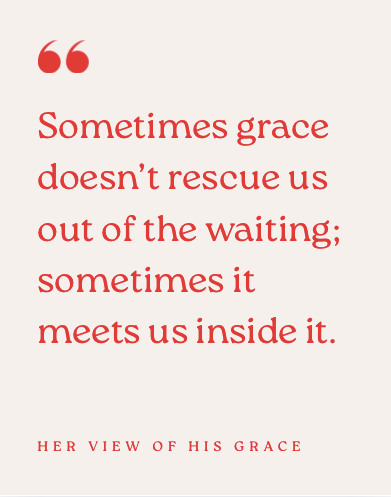
Sometimes grace doesn’t rescue us out of the waiting. Sometimes it meets us inside it.
Trusting God
Jerry Bridges reminds us that trusting God is not rooted in our understanding of what He is doing, but in our confidence in who He is. Waiting exposes how much of our trust has been tied to outcomes we can see. We often say we trust God, but what we really mean is that we trust Him to move on a timeline that makes sense to us.
When He doesn’t, the waiting feels like abandonment rather than care.
Bridges presses us to see that surrender in the waiting is not passive resignation, it is active faith. It is choosing, again and again, to rest in God’s wisdom, love, and sovereignty even when circumstances offer no evidence that change is coming.
In seasons like Joseph’s, where obedience is met with silence, surrender looks like believing that God is still working, still present, and still trustworthy, even when the story appears stalled.
Reset, practicing surrender
Before you move on, pause here. Surrender isn’t passive, it’s practiced.
Ask yourself honestly: What am I trying to control right now? Where am I gripping for certainty instead of trusting God’s care? What outcome have I been carrying that was never mine to hold?
Now take one small, tangible step of release today. Name it out loud in prayer. Open your hands physically as a sign of letting go. Say, “God, I release this to You. I trust You with what I cannot control.”
You don’t need all the answers. You need grace for this moment. And God is faithful to meet you here.
This month’s Freebie

This month I’m sharing Trusting God Daily Prayer Prompts, one for each day, centered on the attributes of God, prayers for our children, our marriages, and the uncertain circumstances we can’t resolve on our own. These are steady words to help you place your trust back into God’s hands, one day at a time. You can find them in The Reset Room as a gentle companion as you keep practicing surrender.
Thank you for being here.
Until next time, live through the lens of His grace. 🤍




 HER VIEW OF HIS GRACE
Leave a comment